
Walk a Brockton Street by Address
Ownership anchors the search. The city assessor ties a situs address to a parcel and its owner. The Plymouth County Registry of Deeds links that parcel or legal description to recorded transfers. Voter rolls add a person-at-address clue. Historical city directory entries can too. Neither source proves a full household roster, so work from the most specific address available and keep the source and date beside each result.
- Search the address or bare street name in the Brockton Web GIS. Save the parcel ID, owner, street address, and any unit or complex result.
- Open the parcel details and use the map to inspect the next parcels. Separate the physical situs from any tax mailing address before drawing conclusions.
- Run the property or owner through Plymouth TitleView. The deed image and its legal description are better title evidence than a tax listing alone.
- For a public voter question, request the appropriate street, ward, precinct, and date range from Brockton Elections. The statewide status tool is for a supplied person, not browsing a block.
- For an older household, ask the Brockton Public Library Historical Room for a City Directory, Poll Tax, or reverse-address copy, then pair the address with a deed date or census year.
Brockton Street Directory Search Fields
The assessor's public interface doubles as a street-directory tool. It accepts a name, an address, or a parcel ID. Brockton adds one local rule that matters. For a street-only search, drop the ST or AVE suffix. Results display a result ID, index, complex, unit, owner, and address before the View Details route, which makes the page useful for locating assessed ownership rather than proving occupancy.
| Web GIS field | How it works in Brockton |
|---|---|
| Name | Optional owner or entity search. |
| Address | Optional address or street search; street-only entry omits ST and AVE. |
| Parcel ID | Optional parcel identifier search. |
| Results | List shows ID, index, complex, unit, owner, and address. |
| View Details | Opens the parcel summary or detail path. |
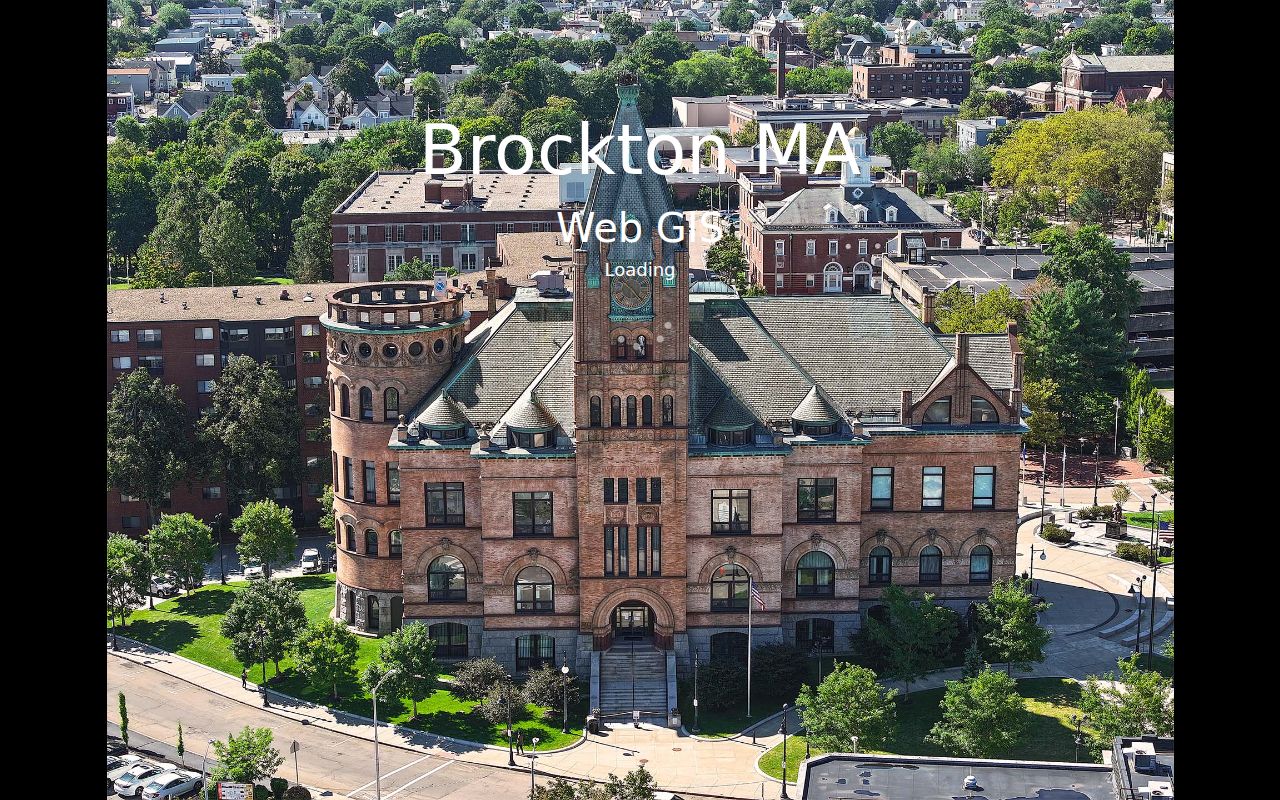
The Brockton Web GIS search screen opens with three entry points: name, address, and parcel. Each routes into the same parcel-based workflow.
The parcel bridges map, deed, permit, and historic sources.
Map Brockton Parcels by Street
Browsing the map beats a single address result. The city interface offers parcels, roads, structures or aerial imagery, a legend, and print controls. Pick the anchor parcel first. Record its owner and parcel ID. Then move to adjacent parcels one at a time. MassGIS describes MuniMapper as supporting abutter identification where a municipality publishes that data, though the live controls can vary. It is a useful check on the idea.
Keep a side-by-side list of parcel, situs address, owner, and source date. Two lots may touch or face each other yet share no postal label or legal relationship. Map context helps civic history. It also helps an estate trail, where a plan or deed may cite a lot reference instead of a modern street number.
Follow Brockton Street Deed Records
TitleView is Plymouth County's deed counterpart. For a Brockton street, this recorded-land system is the Registry's search home. Property mode fits a known address. Grantee search fits a known owner. The prior seller becomes the next grantee. When a name is common, add Brockton as the town plus a date range, document type, or second party, then read the recorded image for the legal description, plan reference, signatures, and prior book or page citation.
Grantor and grantee indexes run from August 6, 1686 to the present. Scanned books go back to 1685. More than 17 million public images sit behind them. Linked searching runs reliably for grantors from 1945 and grantees from 1955. Older indexes can trip a search. Grantor listings before 1970 and grantee listings before 1955 may be unedited, so the printed books at Plymouth correct an old name the index misses.
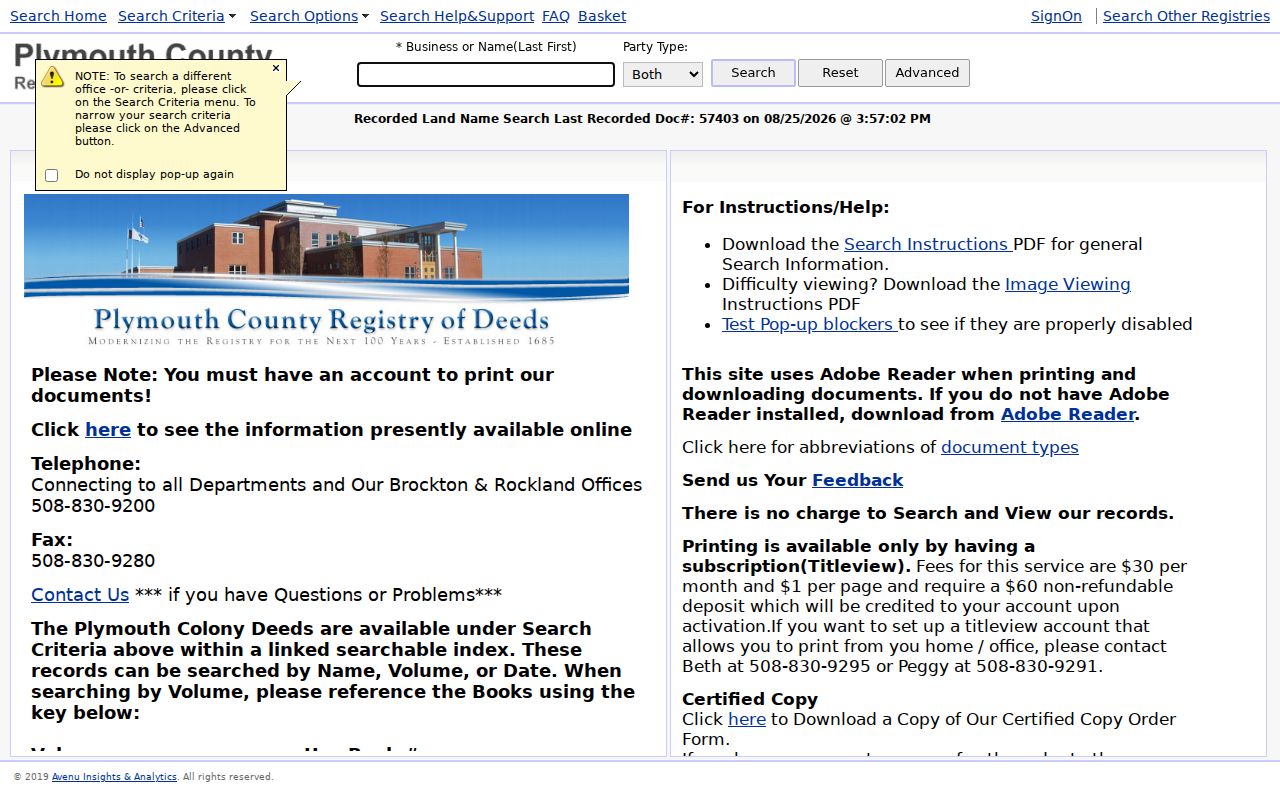
The TitleView recorded-land search offers modes for party, date, document, property, plan, and book or page research.
All those modes mean one thing. A failed address search points to the legal description or party chain, not to the conclusion that no document exists.
Brockton Records Tied to a Street
Every address-keyed source answers a narrower question. The assessor and GIS fix the parcel and owner. The Registry supplies recorded parties. Permit files place work or inspections at an address. A local voter record may identify registered voters within election-law limits, and historical street and city directories can place past occupants or businesses in numbered sequence.
| Address source | Best Brockton use | What it does not establish | Access channel |
|---|---|---|---|
| Assessor parcel | Owner, situs, mailing clue, classification, parcel data | Every current household member | Web GIS, assessor counter, or request |
| GIS map | Mapped parcel, adjacent lots, roads, and layers | Private customer information | Free city map |
| Recorded deed or plan | Grantor, grantee, legal description, transfer trail | Current occupancy by itself | TitleView, Registry station, or copy order |
| Local voter record | Public voter fields by an appropriate local request | Ballot choices or confidential voters | Brockton Elections request |
| Permit or code file | Work, applicant or owner, address, dates, inspection status | Utility or mail-recipient data | CitizenServe, uploads, or City request |
| Historic reverse directory | Historic occupants and businesses in address order | Complete modern residency | Library Historical Room or mail copy |
Brockton Address Permit Clues
The Brockton Building Department keeps property records. Online applications route through CitizenServe. Its published categories include building, plumbing, electrical, HVAC, subdivision, planning, licensing, inspection, and complaint work. A permit can date construction or an alteration. It ties a category, an address, and application, issue, or inspection activity together. It proves no household relationship.
Online uploads are limited and periodic. For a record missing from the portal, ask the Building Records Access Officer by exact street address, parcel ID, and date range. Brockton gives a written response within ten business days, subject to exemptions, redaction, and allowable fees.
Brockton Street Voter Record Requests
Massachusetts treats a personal status check and a local voter-file request as two different things. The Secretary of the Commonwealth runs a voter-status portal. Enter a name, date of birth, and residential ZIP. It returns registration status, a polling place, and elected officials. It is not a Brockton street browser. For a true public records request, go to the Brockton Elections Commission. Specify the street, the ward or precinct, and the year. State whether you want paper or an electronic copy.
What the local file can release depends on the field. Public items include name, residence address, party enrollment, date of birth, registration details, and voting participation. Phone numbers and email addresses may be withheld. So may veteran status, records involving minors, confidential voters, and other protected fields. A missing match proves nothing about where someone lived. It may simply reflect a date discrepancy, a name variation, or protected status.
Note: Describe the record and time period when requesting Brockton Elections material. The statewide list is not a general public record.
Terms Behind a Brockton Street Search
Address research carries terms that sound alike but do very different work in a Brockton street search. Using them precisely keeps a street-directory result from carrying more weight than the public office itself gives it.
- Parcel
- A mapped tax or land unit used by the assessor and GIS.
- Situs address
- The physical address of the parcel, distinct from the address for tax correspondence.
- Plat or plan
- A recorded drawing that ties lots, roads, or subdivision lines to the land description.
- Criss-cross directory
- A reverse directory arranged by address or street rather than by a person's name.
A mailing address that differs from the situs can signal a trust, a business, an older address, or another spot for tax notices. Treat it as a lead. It is not evidence that anyone actually lives there in the Brockton residents directory sense.
North Bridgewater Address Names
Older Brockton address research runs into a local naming break. North Bridgewater became Brockton on May 5, 1874. The city itself adopted the name in 1881. Campello once carried the earlier Plain Village identity. A nineteenth-century deed, newspaper item, or directory entry may therefore sit under any of those labels. It can still concern the same patch of ground.
When a street number or label fails, turn to the paper trail. The City Clerk records street orders that lay out, alter, widen, or discontinue streets. The Clerk also coordinates recording of plans, takings, and easements. Pair those orders with the Registry's plan material to bridge an old description. Never assume a modern suffix or postal label appeared in the historic source.
Brockton Historical Street Sources
The Brockton Public Library Historical Room holds City Directory, Poll Tax, and address-directory material. It also keeps newspaper microfilm. The film reaches back to the North Bridgewater Gazette of 1851. The Enterprise runs from January 1880 forward. Mail researchers can request copies. Just send a detailed letter and a return envelope. Include the library's stated per-page charge. A reference librarian can help spot a reverse or street-number section in a given volume.
Historical address sources serve a different task than current parcel browsing. Once the street or deed has pinned down the address, the Brockton city directory collections cover the fuller shelf. They span its publishers and its year runs.
Brockton Street Directory Privacy Limits
No street directory can list every person physically inside a Brockton address. Public sources revolve around owners, registered voters, recorded parties, applicants, or historical directory entries. RMV address data is restricted. It is protected under the Driver's Privacy Protection Act. Utility customer lists and USPS delivery-recipient information are not public street lists either. Confidential voters may never appear in a resident lookup. Address Confidentiality Program participants and protected court addresses are excluded from any lookup at all.
Lawful use. Brockton address records support personal, lawful research, family history, civic questions, and property context. Never use a record to stalk, harass, threaten, or intimidate a person.
For an error, contact the custodian that created the entry. That means the Assessors for parcel data, the Registry for index issues, Elections for voter corrections, or the city office holding the file.